“more belt” search results (2000)

Introduction to the species and growing environment of coffee trees
Coffee trees can only grow in the tropics and subtropics. Coffee trees can grow in different climates, soils, elevations and rainfall in the middle of the coffee belt. Coffee trees thrive in the hot and humid canyons and forest rainforests of Africa; it still produces high-quality coffee beans in cold, foggy, windy Central America; and in the changeable climate, drought and torrential rain
2016-06-07 Coffee class and growth environment introduction coffee only grow in tropical subtropical
Jamaica boutique coffee beans Blue Mountain Coffee Fine Coffee introduction unique flavor full of taste
The highest peak of the Blue Mountains, which is 2256 meters above sea level, is the highest peak in the Caribbean and a famous tourist attraction. Located in the coffee belt, with fertile volcanic soil, fresh air, no pollution, humid climate, foggy and rainy all the year round (the average precipitation is 1980 mm, the temperature is about 27 degrees), this climate has created the world-famous Jamaican Blue Mountain Coffee. At the same time, it also created the world.
2016-01-08 Jamaica boutique coffee beans Blue Mountain coffee introduction flavor unique taste ten
Full-scented Nicaraguan Coffee Flavor Taste introduction to boutique coffee beans in manor production area
Managua, the capital of Nicaragua, is located in the west of the border, on the south bank of Lake Managua, hence its name. The northwest is 140 kilometers away from the Collinto seaport on the Pacific coast. 55 meters above sea level. It is a Spanish city with beautiful scenery. Because it is located to the east of the Pacific volcanic active seismic belt, there have been four strong earthquakes in the city in the past 100 years, including one in December 1972.
2016-08-12 Aroma rich Nicaraguan coffee flavor taste manor producing area characteristics essence
Flavor and taste characteristics of coffee manor in Nicaragua introduction of boutique Coffee Bean Tianji Manor
Managua, the capital of Nicaragua, is located in the west of the border, on the south bank of Lake Managua, hence its name. The northwest is 140 kilometers away from the Collinto seaport on the Pacific coast. 55 meters above sea level. It is a Spanish city with beautiful scenery. Because it is located to the east of the Pacific volcanic active seismic belt, there have been four strong earthquakes in the city in the past 100 years, including one in December 1972.
2016-08-15 Nicaragua coffee manor producing area flavor taste characteristics boutique coffee beans
A coffee-producing country in Jamaica with fertile new volcanic soil conducive to growing coffee
Most of the Blue Mountains are more than 1800 meters above sea level, of which the highest peak is 2256 meters above sea level. It is also the highest peak in the Caribbean and is a famous tourist attraction. The unique flavor of Blue Mountain Coffee is related to its unique geographical location and climatic conditions. Blue Mountain is located in the coffee belt between 25 degrees north latitude and 25 degrees south latitude, with fertile new volcanic soil, fresh air, no pollution, all the year round.
2016-06-18 Have benefit grow coffee fertile new volcano volcano soil Jamaica produce
Introduction to the flavor and taste characteristics of Nicaraguan Coffee Heavenly Manor
Managua, the capital of Nicaragua, is located in the west of the border, on the south bank of Lake Managua, hence its name. The northwest is 140 kilometers away from the Collinto seaport on the Pacific coast. 55 meters above sea level. It is a Spanish city with beautiful scenery. Because it is located to the east of the Pacific volcanic active seismic belt, there have been four strong earthquakes in the city in the past 100 years, including one in December 1972.
2016-08-22 Very fragrant Nicaraguan coffee divine gift manor flavor taste characteristics introduction
Coffee tree (Coffee Plant)
Coffee. When it comes to coffee, the first thing that comes to mind is drinks. Beverage coffee is made from coffee beans. Where do coffee beans come from: coffee trees (flowering, fruiting) Coffee fruits, or coffee berries or coffee cherries (peeled and a series of processing) Coffee is a plant, the biological classification of ta is as follows: (Kingdom) Angiosperms quilts of the Plantae plant kingdom
2014-09-03 Coffee tree
Introduction to the flavor and taste characteristics of coffee in Nicaragua's Tianyi Manor with rich aroma, smooth and meticulous taste.
In many countries, coffee production will be seriously affected for political reasons. Nicaraguan coffee industry is no exception. The 1979 revolution forced coffee planters to flee to Miami. A period of indecision followed, when the government considered whether to redistribute land (including many plantations), which led to a shortage of coffee and a decline in production since the early 1970s
2016-09-02 Aroma rich smooth meticulous Nicaragua providence manor coffee flavor mouth
Fragrant and delicious Nicaraguan Coffee Manor. Introduction to Tianyi Manor.
Managua, the capital of Nicaragua, is located in the west of the border, on the south bank of Lake Managua, hence its name. The northwest is 140 kilometers away from the Collinto seaport on the Pacific coast. 55 meters above sea level. It is a Spanish city with beautiful scenery. Because it is located to the east of the Pacific volcanic active seismic belt, there have been four strong earthquakes in the city in the past 100 years, including one in December 1972.
2016-08-10 Aroma delicious Nicaragua coffee manor producing area flavor taste characteristics introduction
What is the effect of different packaging on raw beans?
There is a lot of information on the label of raw coffee beans. In addition to clear information at a glance, such as altitude and how to handle it, there are also some common English abbreviations that sometimes take a little thought. GP, refers to a way of packaging raw beans, GrainPro, special packaging for grains. When raw coffee beans are exported from the place of production, they are packed in gunny bags, which is already familiar to most coffee lovers. But,
2015-12-14 Coffee raw beans packaging coffee labels amount of information a lot except one item
Raw bean label: what is "GP"
There is a lot of information on the label of raw coffee beans. In addition to clear information at a glance, such as altitude and how to handle it, there are also some common English abbreviations that sometimes take a little thought. GP, refers to a way of packaging raw beans, GrainPro, special packaging for grains. When raw coffee beans are exported from the place of production, they are packed in gunny bags, which is already familiar to most coffee lovers. But,
2014-09-03 Raw bean label
Fragrant and delicious Coffee from Los Congo Manor in Nicaragua introduction to boutique coffee
Managua, the capital of Nicaragua, is located in the west of the border, on the south bank of Lake Managua, hence its name. The northwest is 140 kilometers away from the Collinto seaport on the Pacific coast. 55 meters above sea level. It is a Spanish city with beautiful scenery. Because it is located to the east of the Pacific volcanic active seismic belt, there have been four strong earthquakes in the city in the past 100 years, including one in December 1972.
2016-08-26 Aromatic delicious Nicaragua Los Congo Manor Coffee Flavor taste Special
The world's major coffee producing areas introduce the basic knowledge of fine coffee coffee beans represented by all continents
Coffee comes from coffee beans, which are harvested and processed from the fruit of trees. Coffee trees grow at the center of the equator, between latitudes of 25 degrees south and north, and are called the homes of tropical or subtropical countries called coffee belts. At present, there are about 60 coffee-producing countries. Coffee is produced in South America, Central America, the West Indies, Asia, Africa, Arabia, the South Pacific and
2016-04-29 World main coffee producing area introduction boutique knowledge continent representative
Costa Rican Tarasu Latin American Coffee introduces Lajas Manor
Costa Rica is a Spanish word meaning rich coast. At the top of the Costa Rican national emblem flutters a blue belt with Central America, expressing Costa Ricans' memory of the original federation; below is a white ribbon with green branches and the name of the Republic. The corn kernels on both sides of the national emblem are round and golden, indicating that the agriculture of this plateau country is dominated by corn cultivation.
2016-06-15 Costa Rica Tara Latin America Coffee introduction Haas Manor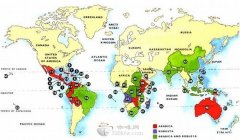
Coffee beans grow at the center of the equator
Coffee beans grow in tropical or subtropical agricultural gardens around the equator, called coffee belts, and travel to Japan with ships. When the brown coffee beans appear in front of your eyes, they have actually gone through a variety of different circulation processes and the hands of many people.
2014-08-19 Coffee knowledge coffee bean growth coffee belt equatorial growth
The main producing areas and characteristics of Coffee in the World
Coffee production zones (commonly known as coffee belts) range from 25 degrees north latitude to 30 degrees south latitude, covering many countries in Central, West Africa, the Middle East and South Asia, the Pacific, Latin America and the Caribbean. The reason why coffee cultivation is concentrated in this area is mainly due to the limitation of temperature. Because coffee trees are vulnerable to frost, neither north nor south latitude is suitable, especially in the tropics.
2015-02-11 World coffee major producing areas characteristics common sense production zone called
Introduction to the planting technology of coffee the planting conditions and distribution of coffee
Coffee planting conditions and distribution 1. What is coffee? Coffee (Coffee) is derived from the Latin word Coffea (biological word name) and belongs to a member of the Rubiaceae family. These plants are all woody plants, most of which are distributed in the tropics, with more than 500 classifications and about 6000 varieties. Most of the Coffea plants are tropical 5-6 meters high.
2016-07-11 Coffee planting technology introduction condition distribution coffee
Characteristics of boutique Nicaraguan coffee beans Manning coffee
Nicaraguan coffee of high quality is in the forefront of coffee beans in the world and enjoys a good reputation. Its particles are moderate in size, mild in taste and very aromatic and mellow. Nicaragua is located in central Central America, bordered by the Pacific Ocean to the west and the Caribbean Sea to the east. The highlands in the north and the coastal plains in the east are part of the Central American volcanic belt. The eastern plain is high-temperature and rainy, with a tropical maritime climate. Suitable
2016-05-04 Boutique Nicaragua coffee beans characteristics Mante coffee
Introduction to Jamaican Blue Mountain Coffee with rich, balanced, fruity and sour taste
The unique flavor of Blue Mountain Coffee is related to its unique geographical location and climatic conditions. Blue Mountain is a coffee belt between 25 degrees north latitude and 25 degrees south latitude, with fertile new volcanic soil, fresh air, no pollution, rainy all the year round and great temperature difference between day and night. The most important thing is that every afternoon, clouds cover the top of the mountain, which not only shades the coffee trees naturally, but also brings abundance.
2016-06-20 Flavor full-bodied balanced water fruity sour Jamaica Blue Mountain coffee introduction
Indonesian Coffee Flavor and Taste Manor introduction to Indonesian Coffee characteristics Fuyin Manor Kopi Luwak
Across the north and south sides of the equator, Indonesia belongs to the tropical rain forest climate, which is controlled by the equatorial low pressure belt all the year round, prevailing updraft, high temperature and rainy all the year round, the main type of precipitation is convective rain, the annual average temperature is 25 ℃, Rain Water is abundant, with sufficient light, distributed in tropical rain forests, subtropical evergreen broad-leaved forests, mountain shrubs or hills, mountains, grasses, etc.
2016-08-01 Indonesia coffee flavor taste manor introduction characteristics fuyin cat shit